

Contour Lines: The Essential Guide to Mapping Art and Design
What Are Contour Lines
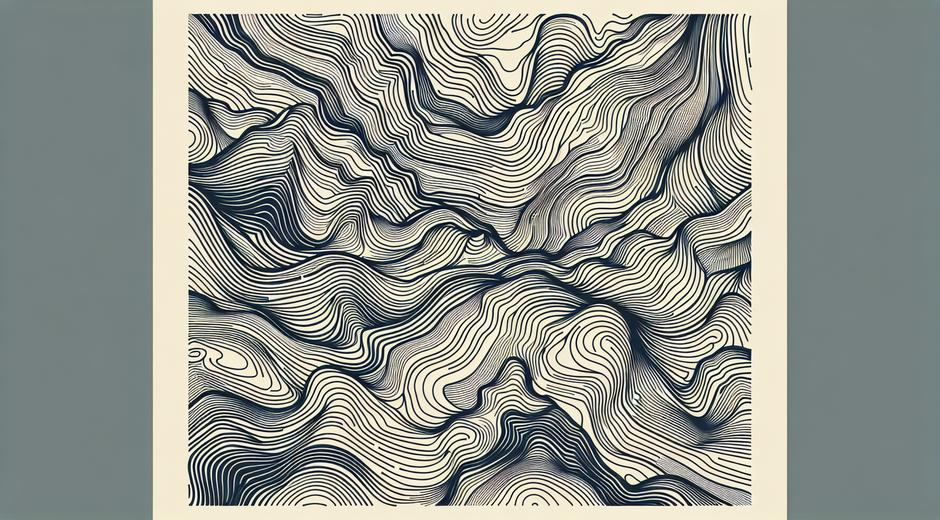
Contour Lines are continuous lines drawn on a map that connect points of equal elevation. In other words each line represents a constant value for height above a reference level. These lines are the backbone of topographic maps and they help readers visualize the three dimensional shape of terrain on a two dimensional surface. Beyond cartography Contour Lines have become a visual tool in art design fashion and architecture where they convey shape depth and motion with elegant simplicity.
How Contour Lines Work in Mapping
On a topographic map each contour line indicates a specific elevation value. The difference in elevation between adjacent lines is called the contour interval. When lines are close together the slope is steep. When lines are farther apart the slope is gentle. Closed loops often show hills or depressions depending on the labeling and symbols used. Index lines are usually drawn thicker and labeled with elevation to help orient the reader. Once you learn to read these patterns you can estimate ridge lines valleys saddles and cliffs without stepping outdoors.
Reading Contour Lines with Confidence
Start by locating the index lines and reading the elevation labels. Note the contour interval to understand the vertical step between lines. Look for concentric circles which commonly mark hilltops. V shaped patterns indicate stream channels with the V pointing upstream. A series of closely packed lines signals a steep slope while spaced lines show a gentle incline. By practicing on a few maps you will develop an intuitive sense of landscape form which is useful for planning hikes site selection and emergency navigation.
Contour Lines in Art and Illustration
Artists use Contour Lines to define forms with minimal detail. An outline can show the edge of an object while internal contour lines suggest volume and curvature. In illustration these lines are employed to guide the eye across a composition and to suggest light and shadow without shading. Designers apply this principle in product sketches fashion patterns and graphic work. In each case contour based drawing simplifies complex three dimensional information into readable two dimensional marks.
Contour Lines in Fashion and Makeup
The concept of Contour Lines translates neatly into style applications. In clothing pattern making designers use lines to shape the garment to the body. In beauty the same word describes techniques to accentuate or soften facial structure by applying darker and lighter tones along specific lines and planes. Understanding the interplay of light shadow and edge allows stylists and makeup artists to sculpt form and highlight features in a way that flatters the individual.
Architectural and Industrial Design Uses
Architects and industrial designers use Contour Lines to communicate topography and object form. Site plans show ground levels with contour lines to inform decisions about drainage foundation work and landscaping. In product design contour studies help teams visualize ergonomic curves and surface flow. Using contour based renderings early in the process accelerates decision making and reduces costly revisions later.
Digital Tools and Contour Lines
Modern mapping and design platforms generate Contour Lines from elevation data using software. Geographic information systems convert digital elevation models into contour layers that can be styled and analyzed. Designers use vector drawing tools to create clean contour studies which can be exported for manufacturing or presentation. These digital workflows speed up iteration and open up creative possibilities such as animated morphs and layered visual effects.
Practical Tips for Creating and Using Contour Lines
When you make or use contour diagrams consider a clear legend and consistent interval. Choose a contour interval that reveals the scale of interest. Too large an interval will hide detail and too small an interval can clutter the view. Use thicker lines or different color for index contours to aid readability. In design contexts vary line weight to imply depth and to guide attention. Pair contour information with labels or simple shading to reduce ambiguity.
Common Mistakes to Avoid
One frequent error is misreading the contour interval. Verify this before making elevation estimates. Another issue is assuming every closed loop is a hill. Some loops mark depressions which require careful labeling. In creative work avoid heavy reliance on contour outlines alone when conveying complex materials or textures. Combine contour lines with surface cues to create a convincing result.
Learning Exercises
Practice makes mastery. Start with local topographic sheets and try to sketch the terrain in three dimensions based only on contour data. Next attempt to draw simple objects using contour lines to indicate curvature. For designers create layered contour animations to explore transitions between shapes. These exercises refine spatial reasoning and boost your ability to translate between dimensions.
Why Contour Lines Still Matter
Despite advances in three dimensional modeling and satellite imagery Contour Lines remain a compact and effective way to communicate form. They are easy to print and interpret and they work across disciplines from outdoor navigation to high end design. Because they condense complex spatial data into readable patterns they remain essential for professionals and enthusiasts alike.
Resources and Further Reading
For readers who want a mix of trend coverage tutorials and creative inspiration visit styleradarpoint.com where guides explore both technical mapping topics and style oriented applications. You will find actionable tips project ideas and examples that bridge mapping art and design.
Bringing Contour Lines into Your Projects
Start small by adding contour studies to your sketchbooks or site reports. Experiment with line weight color and spacing to communicate different material qualities or to suggest movement. If you work with clients present a simple contour overview before diving into full renderings. This helps align expectations and speeds approval cycles. For additional examples and trend focused features consider exploring the curated content at StyleRadarPoint.com which highlights innovative uses of contour language across industries.
Conclusion
Contour Lines are a timeless visual device that encode elevation and form into a language anyone can learn. From trail navigation to high fashion contour lines help creators and explorers see the world in layers. By mastering the rules and experimenting with style you can apply contour thinking to solve practical problems and to craft compelling visuals. Whether your focus is practical mapping or creative expression these lines connect the technical and the poetic in a way that remains fresh and useful.